
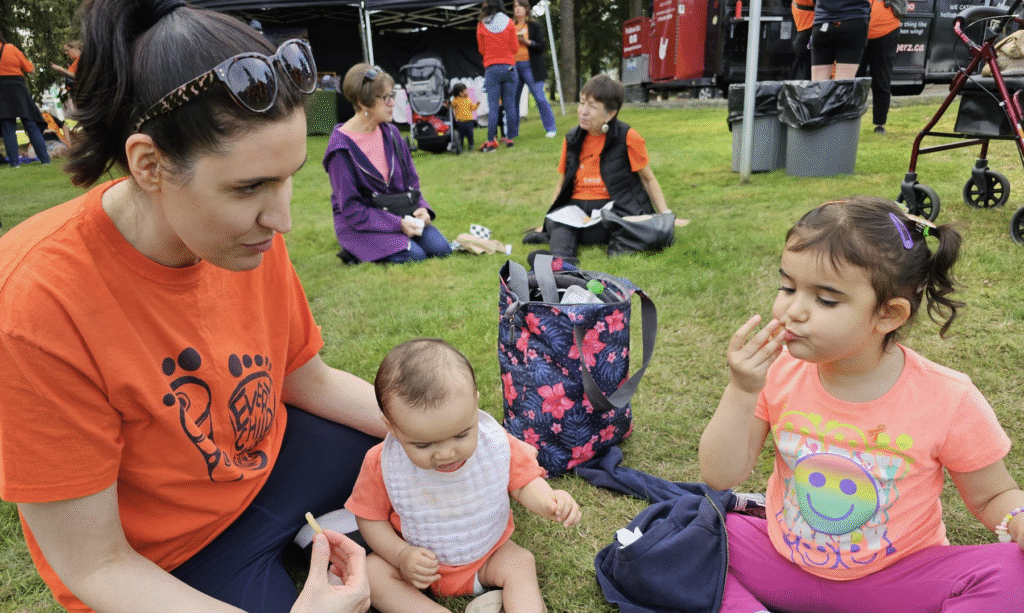
I live and work on the unceded, traditional, and ancestral territory of the Stó:lō Nation, I am a mother of two Indigenous children, and a Registered Clinical Counsellor (RCC), supporting women, who have been impacted by Intimate Partner Violence (IPV).
As I bear witness to the stories of harm and wounds that have become part of the fabric of one’s DNA, the National Day for Truth and Reconciliation is a time of deep reflection. It calls upon us, to honour the survivors of residential schools, remember the children who never came home, and examine how colonial violence continues to shape the lives of Indigenous peoples today.
Truth: Naming Violence, Bearing Witness
In my counselling practice, truth often marks the beginning of healing. For women who have experienced IPV, speaking the truth — “saying this happened to me” — can create fear of inciting harm, retribution and disbelief. Truth be told, this is a looking glass into the shortcomings of our charge assessment standards and the threshold needed to prosecute offences.
Such silencing however, mirrors the experience of many residential school survivors who, for decades, were denied recognition, justice, and support. Like them, many of the women I work with carry complex trauma rooted not only in personal experience but also in systemic failure. As stated in the Final Report of the National Inquiry into Missing and Murdered Indigenous Women and Girls (2019): “Indigenous women face some of the highest rates of gender-based violence in this country.” This is not just a statistic; it is a reflection of systemic racism, poverty, intergenerational trauma, and the lasting impacts of colonization.
Reconciliation: Not Just a Buzzword
As a society, we are still far from reconciliation — especially when we examine how little meaningful support is offered to Indigenous peoples today. We see this clearly in the chronic underfunding of Indigenous health and wellness. Despite ongoing trauma, the First Nations Health Authority (FNHA) recently cut counselling coverage for many Indigenous clients. This decision has left individuals (often survivors of violence or intergenerational trauma) with even fewer options for support. Folks are pushed toward the limitations of community-based resources with overwhelming waitlists and short-term models of care. Not only does this further entrench inequality, it extinguishes hope for generations to come—our children.
As professionals, we are required to take cultural safety training and ensure our email signatures are appropriately marked with land acknowledgments. While these initiatives are valuable and support in relationship building, if they are not paired with accountability and action, they risk becoming box-ticking exercises and performative gestures. If a land acknowledgment is the only Indigenous-related statement a person or organization makes, and if no Indigenous people are consulted, centered, or supported, it rings hollow.
The Work We Must Do
Reconciliation cannot be achieved through words alone. It must show up in:
-
- Policies that prioritize Indigenous-led healing and mental health supports
-
- Long-term, sustainable funding that honours Indigenous sovereignty and wellness
-
- True accountability in how services are delivered and who they serve
-
- And in every therapeutic relationship, where trust, humility, and cultural safety are not optional, but essential
My Commitment
As a mother and Registered Clinical Counsellor, I am committed to walking this path — imperfectly, but intentionally. I will continue to:
-
- Create safer spaces for all women, particularly Indigenous women who are so often over-targeted and under-supported
-
- Challenge systems that perpetuate colonial violence and racism
-
- Advocate for real investment in Indigenous wellness, beyond symbolic gestures
-
- And approach every client’s story with care, respect, and a trauma-informed lens
On this National Day for Truth and Reconciliation, I hold space for the truths that have been buried, the lives that have been lost, and the healing that is still needed. Reconciliation is not just for Indigenous people to carry. It is a collective responsibility, and it must live in our practices, our institutions, and our hearts